


Introduction
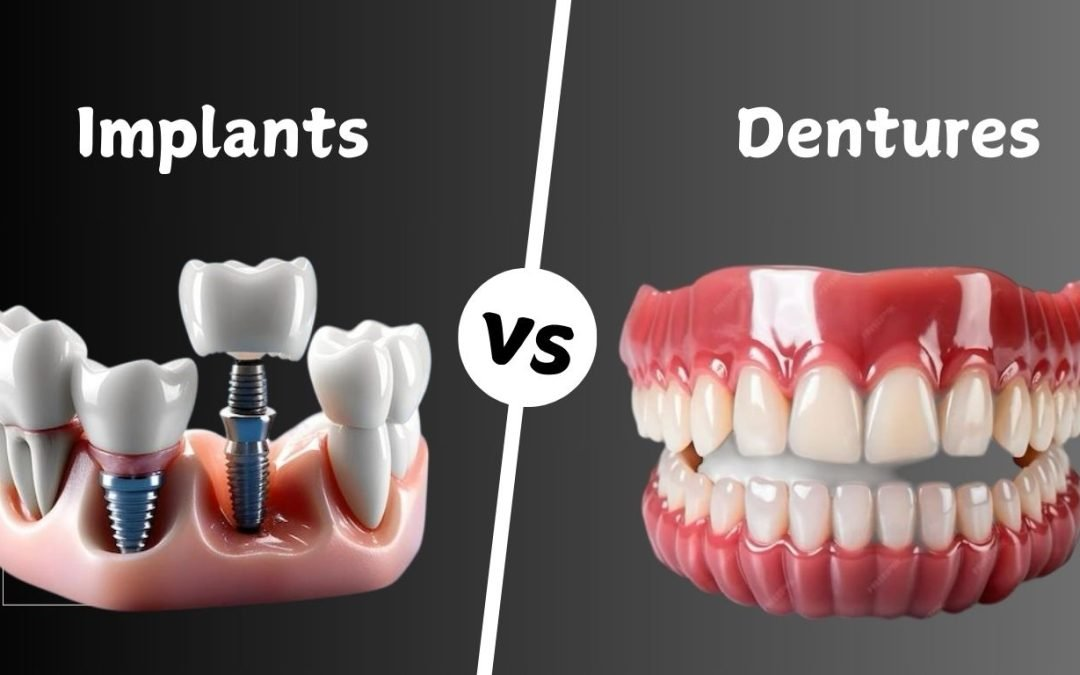
Choosing between dental implants and dentures depends on several factors, including your oral health, budget, lifestyle, and long-term goals. While both options restore your smile and improve daily function, they differ significantly in comfort, durability, maintenance, and cost.
This guide compares dental implants and dentures, explains their advantages and disadvantages, and helps you understand which option may be the best choice for your needs.
Why Replacing Missing Teeth Is Important
Leaving missing teeth untreated can lead to several oral health problems, including:
- Difficulty chewing food
- Speech problems
- Bone loss in the jaw
- Shifting of nearby teeth
- Increased risk of gum disease
- Changes in facial appearance
- Reduced self-confidence
Replacing missing teeth helps maintain proper oral function and supports long-term dental health.
What Are Dental Implants?
Dental implants are artificial tooth roots made from titanium or other biocompatible materials. They are surgically placed into the jawbone, where they fuse with the bone through a natural healing process called osseointegration.
Once the implant has healed, a custom-made dental crown is attached to the implant, creating a replacement tooth that looks and functions like a natural tooth.
Dental implants can replace:
- A single missing tooth
- Multiple missing teeth
- An entire row of teeth using implant-supported bridges or dentures
Benefits of Dental Implants
Dental implants offer many advantages.
Natural Appearance
Implants closely resemble natural teeth in shape, color, and function.
Long-Lasting Solution
With proper care, implants can last for decades and may even last a lifetime.
Improved Chewing Ability
Because implants are securely anchored in the jawbone, they provide excellent chewing strength.
Prevent Bone Loss
Unlike traditional dentures, implants stimulate the jawbone and help prevent bone deterioration.
Comfortable Fit
Implants become a permanent part of the mouth and do not slip while eating or speaking.
Easy Maintenance
You care for implants much like natural teeth by brushing, flossing, and attending regular dental checkups.
Possible Drawbacks of Dental Implants
Although implants offer many benefits, they also have some disadvantages.
- Higher initial cost
- Requires oral surgery
- Healing may take several months
- Not suitable for everyone
- Patients need sufficient jawbone density
Some individuals may require bone grafting before implant placement.
What Are Dentures?
Dentures are removable dental appliances designed to replace missing teeth and surrounding gum tissue.
Modern dentures are made from durable acrylic, resin, metal, or flexible materials and are custom-fitted for each patient.
Dentures may replace:
- A few missing teeth
- Several missing teeth
- All upper teeth
- All lower teeth
- Both upper and lower teeth
Types of Dentures
Full Dentures
Full dentures replace all teeth in the upper or lower jaw.
They rest directly on the gums and are removed daily for cleaning.
Partial Dentures
Partial dentures are used when some natural teeth remain.
They attach to existing teeth using small metal or flexible clasps.
Implant-Supported Dentures
These dentures combine the stability of implants with the affordability of dentures.
Several implants hold the denture securely in place, reducing movement during eating and speaking.
Benefits of Dentures
Dentures remain a popular choice for many patients.
Advantages include:
- Lower upfront cost
- Non-surgical treatment option
- Faster treatment process
- Suitable for patients with bone loss
- Easier to adjust if additional teeth are lost
- Restores appearance and chewing ability
Modern dentures are more comfortable and natural-looking than older designs.
Disadvantages of Dentures
Traditional dentures also have some limitations.
- May move while eating
- Can become loose over time
- Require daily removal for cleaning
- May reduce taste sensation
- Do not prevent bone loss
- Need replacement every several years
Regular adjustments may be necessary as the shape of the jaw changes.
Dental Implants vs. Dentures
Appearance
Both options can provide an attractive smile.
However, implants usually offer the most natural appearance because they emerge from the gums like real teeth.
Winner: Dental Implants
Comfort
Implants feel very similar to natural teeth.
Traditional dentures may require time to adjust and can sometimes cause sore spots.
Winner: Dental Implants
Stability
Implants remain firmly fixed in place.
Traditional dentures may slip while:
- Eating
- Speaking
- Laughing
Implant-supported dentures provide greater stability than conventional dentures.
Winner: Dental Implants
Eating
Implants allow patients to enjoy a wider variety of foods.
Hard foods such as:
- Apples
- Steak
- Nuts
- Corn on the cob
are generally easier to eat with implants.
Denture wearers may need to avoid particularly hard or sticky foods.
Winner: Dental Implants
Oral Hygiene
Implants are cleaned just like natural teeth.
Dentures require:
- Daily removal
- Soaking overnight
- Special cleaning solutions
Winner: Dental Implants
Treatment Time
Dentures can usually be completed within several weeks.
Dental implants often require several months because healing occurs between treatment stages.
Winner: Dentures
Cost
Dentures generally cost less initially.
Dental implants involve surgery and laboratory work, making them more expensive upfront.
However, implants may prove more cost-effective over time because they typically last much longer.
Winner: Dentures (short-term)
Longevity
Dental implants often last decades with proper care.
Dentures usually require replacement or adjustment every 5 to 10 years.
Winner: Dental Implants
Who Is a Good Candidate for Dental Implants?
You may be a good candidate if you:
- Have healthy gums
- Have enough jawbone
- Do not smoke heavily
- Practice good oral hygiene
- Are in good overall health
Your dentist will evaluate your mouth using X-rays or 3D imaging before recommending treatment.
Who May Benefit More from Dentures?
Dentures may be the better option if you:
- Need to replace many teeth
- Prefer a non-surgical treatment
- Have significant bone loss
- Need a more affordable solution
- Have medical conditions that limit surgery
Your dentist can determine whether dentures are appropriate for your situation.
Caring for Dental Implants
Maintain implants by:
- Brushing twice daily
- Flossing every day
- Using interdental brushes if recommended
- Visiting your dentist regularly
- Avoiding smoking
- Wearing a night guard if you grind your teeth
Good maintenance helps implants remain healthy for many years.
Caring for Dentures
Proper denture care includes:
- Cleaning dentures every day
- Removing them before sleeping
- Soaking them overnight
- Brushing your gums and tongue
- Visiting your dentist for adjustments
Handle dentures carefully to avoid damage.
Frequently Asked Questions
Are dental implants painful?
Most patients experience only mild discomfort after implant surgery, which usually improves within a few days. Your dentist may recommend pain relief and aftercare instructions to support healing.
How long do dental implants last?
With proper oral hygiene and regular dental visits, dental implants can last for decades and may even last a lifetime.
Can dentures look natural?
Yes. Modern dentures are custom-made to closely resemble natural teeth and gums, providing a realistic appearance.
Which option is more affordable?
Traditional dentures usually have a lower initial cost than dental implants. However, implants may require fewer replacements over time.
Can older adults get dental implants?
Yes. Age alone is not a barrier. Many older adults successfully receive dental implants if they have healthy gums and sufficient jawbone.
Conclusion
Both dental implants and dentures are effective solutions for replacing missing teeth, but the right choice depends on your individual needs, oral health, and budget. Dental implants offer excellent stability, durability, and a natural feel, making them a long-term investment for many patients. Dentures, on the other hand, provide a more affordable and non-surgical option that can restore function and appearance in a shorter amount of time.
Consulting with your dentist is the best way to determine which treatment is right for you. A professional evaluation can help you choose the solution that supports your oral health, improves your confidence, and allows you to enjoy everyday activities with a comfortable and healthy smile.