


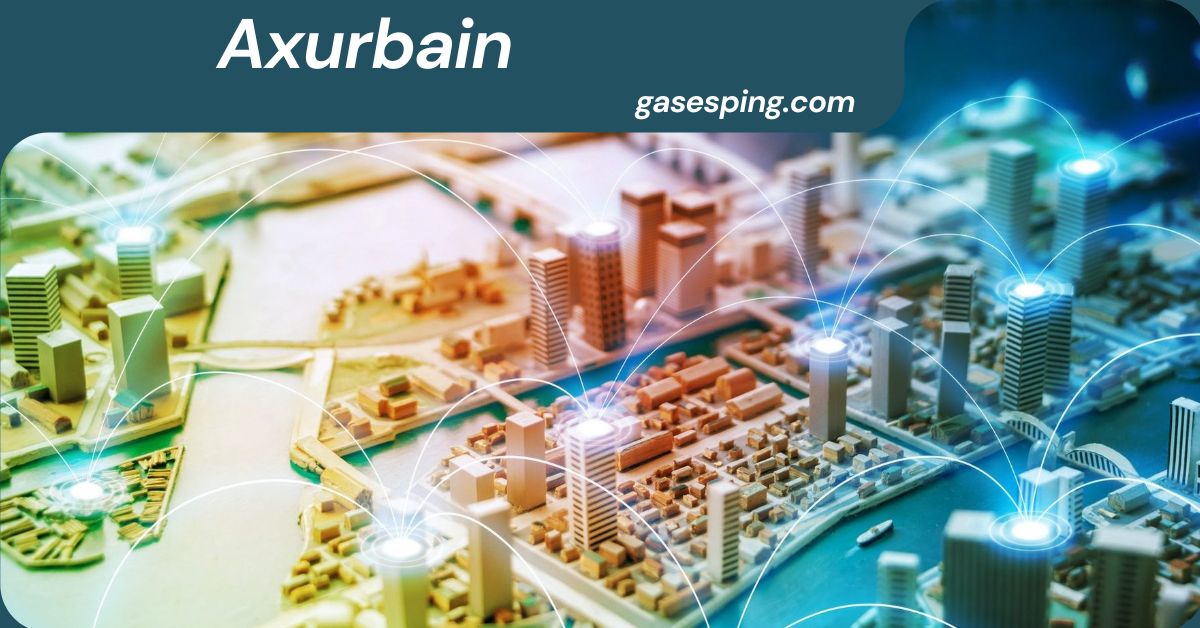
Cities have always changed with time. From ancient villages to modern metropolitan areas, every generation has introduced new ways of living, working, and connecting. Today, urban areas face major challenges such as traffic congestion, pollution, rising populations, housing shortages, energy consumption, and climate change. Traditional city planning alone is no longer enough to solve these complex problems.
- What Is Axurbain?
- The Core Philosophy Behind Axurbain
- Key Characteristics of Axurbain
- How Axurbain Works
- Technologies That Support Axurbain
- Artificial Intelligence
- Internet of Things (IoT)
- Cloud Computing
- Geographic Information Systems (GIS)
- Renewable Energy Technologies
- Major Benefits of Axurbain
- Better Quality of Life
- Greater Economic Growth
- Environmental Protection
- Improved Public Safety
- Efficient Resource Management
- Real-World Applications of Axurbain Principles
- Challenges of Implementing Axurbain
- High Initial Investment
- Data Privacy and Security
- Digital Inclusion
- Maintaining Human Connection
- Long-Term Planning
- The Future of Axurbain
- Artificial Intelligence Will Become More Predictive
- Climate-Resilient Infrastructure
- Autonomous Transportation
- Energy-Positive Communities
- Healthier Urban Living
- Axurbain vs Traditional Urban Development
- Best Practices for Building an Axurbain Community
- Start With Community Needs
- Invest in Green Infrastructure
- Use Technology With Purpose
- Encourage Public Participation
- Measure Progress
- Expert Insights on Axurbain
- Common Misconceptions About Axurbain
- Myth 1: Axurbain Is Only About Technology
- Myth 2: Only Large Cities Can Apply Axurbain
- Myth 3: Axurbain Eliminates Human Decision Making
- Myth 4: Sustainability Slows Economic Growth
- Myth 5: Axurbain Is a Finished Model
- Why Axurbain Matters More Than Ever
- Conclusion
- FAQs
- Is axurbain a technology platform or a city planning concept?
- Can existing cities adopt axurbain principles?
- How does axurbain support environmental sustainability?
- Does axurbain replace traditional government planning?
- What industries benefit from axurbain?
- Is axurbain suitable for developing communities?
- How does axurbain improve daily life?
- Why is community participation important in axurbain?
This is where the concept of axurbain comes into focus.
Axurbain represents a fresh vision of urban development where technology, sustainability, and human well-being work together. Instead of building cities around roads, buildings, or machines, axurbain places people at the center of every decision. It combines smart technologies, green infrastructure, community engagement, and data-driven planning to create cities that continuously learn, adapt, and improve.
Unlike many smart city models that focus mainly on digital technology, axurbain emphasizes the balance between innovation and humanity. Technology becomes a tool that supports healthier neighborhoods, stronger communities, cleaner environments, and better quality of life rather than replacing human interaction.
As cities continue to grow across the United States and around the world, the principles behind axurbain provide a practical framework for creating urban environments that are resilient, efficient, and enjoyable for future generations.
This guide explains everything you need to know about axurbain, including its meaning, philosophy, technologies, benefits, practical applications, and why it may become one of the most influential approaches to urban development in the coming decades.
What Is Axurbain?
Axurbain is a modern urban philosophy that reimagines how cities should function in the digital age. It combines advanced technology with sustainable planning and human-centered design to build communities that continuously evolve alongside the needs of their residents.
Rather than viewing a city as a collection of buildings and infrastructure, axurbain sees the entire urban environment as a living ecosystem. Every component—from transportation systems and energy grids to public parks and digital services—works together as part of an intelligent network.
The main goal of axurbain is to create cities that:
- Learn from real-time information
- Respond to changing community needs
- Protect the environment
- Improve public health
- Encourage social interaction
- Support economic growth
- Use resources more efficiently
- Create safer and more inclusive neighborhoods
In simple terms, axurbain transforms cities into places that not only function efficiently but also actively improve the daily lives of the people who live there.

The Core Philosophy Behind Axurbain
At its heart, axurbain is built on one simple belief:
Cities should evolve with people instead of expecting people to adapt to outdated urban systems.
Many cities were designed decades or even centuries ago. Population growth, technological advancement, and environmental challenges have changed the way people live, but many urban systems have not kept pace.
Axurbain addresses this gap by creating flexible urban environments capable of continuous improvement.
Its philosophy rests on several key principles.
Also Read:Monika Leveski: Complete Biography, Career Journey, Achievements, and Influence
People First
Every urban decision begins with the needs of residents rather than technology.
Instead of asking,
“What technology should we install?”
Axurbain asks,
“What problem are people facing, and how can technology help solve it?”
This human-first mindset leads to better public spaces, improved transportation, safer neighborhoods, and more accessible services.
Continuous Learning
Cities constantly generate information through transportation systems, utilities, weather stations, environmental sensors, and public services.
Axurbain encourages responsible use of this data to identify problems early and improve decision-making.
For example:
- Detecting traffic congestion before it becomes severe
- Identifying neighborhoods needing additional healthcare services
- Predicting energy demand
- Monitoring air quality
- Improving emergency response
The city becomes smarter every day by learning from its own operations.
Sustainability
Environmental responsibility is a central part of axurbain.
Instead of treating sustainability as an optional feature, it becomes part of every planning decision.
This includes:
- Renewable energy
- Green buildings
- Efficient public transportation
- Water conservation
- Urban forests
- Waste reduction
- Circular economy initiatives
The goal is to reduce environmental impact while supporting long-term economic growth.
Community Participation
Residents are active participants rather than passive users.
Modern digital platforms allow citizens to:
- Report local issues
- Participate in planning
- Vote on community improvements
- Share ideas
- Collaborate with local governments
Axurbain recognizes that successful cities grow stronger when communities help shape their future.
Key Characteristics of Axurbain
Although every city may apply the concept differently, most axurbain-inspired developments share several important characteristics.
Smart Infrastructure
Infrastructure becomes intelligent rather than static.
Examples include:
- Smart traffic signals
- Connected streetlights
- Intelligent parking systems
- Automated water management
- Smart electrical grids
- Digital public transportation
These systems communicate with each other to improve overall efficiency.
Green Urban Design
Nature becomes an essential part of city planning.
Instead of removing green spaces during development, axurbain integrates them throughout the city.
Examples include:
- Rooftop gardens
- Urban parks
- Green walls
- Rain gardens
- Tree-lined streets
- Natural stormwater systems
These features improve air quality while reducing heat and flooding.
Flexible Public Spaces
Modern cities must support changing lifestyles.
Axurbain encourages public spaces that serve multiple purposes.
A public square may function as:
- A farmers market
- Outdoor classroom
- Festival venue
- Exercise area
- Emergency gathering point
Flexible design allows cities to adapt over time.
Digital Connectivity
Reliable internet access becomes an essential public service.
High-speed connectivity supports:
- Remote work
- Online education
- Digital healthcare
- Smart transportation
- Business growth
- Emergency communication
Digital inclusion ensures every resident benefits from technological progress.
How Axurbain Works
Axurbain functions through the integration of several interconnected systems.
Data Collection
Information comes from multiple sources, including:
- Environmental sensors
- Transportation systems
- Utility networks
- Weather stations
- Public safety systems
- Citizen reports
This information creates a comprehensive picture of how the city operates.
Real-Time Analysis
Artificial intelligence and advanced analytics examine incoming information continuously.
Patterns are identified quickly.
For example:
If traffic increases in one area, traffic lights may automatically adjust their timing to improve flow.
If air pollution rises, environmental agencies receive immediate alerts.
If energy demand spikes during extreme weather, smart grids can balance electricity distribution more effectively.
Decision Support
Instead of replacing human decision-makers, technology supports them.
City officials receive actionable insights that help them:
- Prioritize projects
- Allocate resources
- Improve emergency planning
- Reduce costs
- Enhance public services
This partnership between technology and leadership creates better outcomes.
Continuous Improvement
Unlike traditional urban planning, which often follows fixed long-term plans, axurbain encourages ongoing improvement.
Cities regularly evaluate:
- Resident satisfaction
- Environmental performance
- Infrastructure efficiency
- Public safety
- Transportation quality
Lessons learned are applied to future improvements.
Technologies That Support Axurbain
Technology serves as the foundation of axurbain, but it always supports human goals rather than replacing them.
Artificial Intelligence
AI analyzes enormous amounts of urban data.
It helps cities:
- Predict maintenance needs
- Improve traffic flow
- Reduce energy waste
- Enhance emergency response
- Support healthcare planning
Internet of Things (IoT)
Connected devices monitor city operations.
Examples include:
- Smart streetlights
- Air quality sensors
- Water meters
- Waste collection systems
- Parking sensors
These devices provide real-time information that improves city management.
Cloud Computing
Cloud platforms allow departments to share information securely.
Instead of isolated systems, transportation, utilities, healthcare, and emergency services can coordinate more effectively.
Geographic Information Systems (GIS)
Interactive mapping technology helps planners visualize:
- Population growth
- Infrastructure
- Environmental changes
- Flood risks
- Transportation networks
Better maps lead to better planning decisions.
Renewable Energy Technologies
Axurbain strongly supports cleaner energy sources such as:
- Solar power
- Wind energy
- Battery storage
- Smart electrical grids
- Electric vehicle charging networks
These technologies reduce carbon emissions while improving energy resilience.
Major Benefits of Axurbain
Cities adopting axurbain principles can experience improvements across multiple areas.
Better Quality of Life
Residents benefit from:
- Cleaner air
- Shorter commutes
- Safer streets
- Better public transportation
- More parks
- Improved healthcare access
- Stronger community connections
These improvements contribute to healthier and happier communities.
Greater Economic Growth
Businesses thrive in environments with:
- Reliable infrastructure
- Skilled workers
- Efficient transportation
- Digital connectivity
- Innovation ecosystems
Axurbain creates conditions that attract investment and encourage entrepreneurship.
Environmental Protection
Sustainability measures reduce pollution through:
- Cleaner transportation
- Renewable energy
- Green construction
- Efficient water use
- Improved recycling
- Urban forestry
The result is a healthier environment for future generations.
Improved Public Safety
Technology enhances emergency preparedness through:
- Faster emergency response
- Intelligent surveillance
- Disaster prediction
- Flood monitoring
- Fire detection
- Better communication systems
Communities become more resilient during emergencies.
Efficient Resource Management
Cities waste fewer resources by optimizing:
- Electricity
- Water
- Fuel
- Waste collection
- Public transportation
- Infrastructure maintenance
Lower waste means lower operating costs over time.
Real-World Applications of Axurbain Principles
Although axurbain is a broader philosophy, its ideas can be applied across many areas of urban life.
Transportation
Smart transportation systems can:
- Reduce congestion
- Improve public transit
- Support cycling
- Expand pedestrian zones
- Encourage electric vehicles
- Optimize traffic signals
Travel becomes faster, safer, and more environmentally friendly.
Healthcare
Connected healthcare services improve access through:
- Telehealth
- Mobile clinics
- Health monitoring
- Emergency coordination
- Community wellness programs
Residents receive care more efficiently.
Education
Schools benefit from:
- Smart classrooms
- Digital learning platforms
- Community technology centers
- Public Wi-Fi
- Interactive educational spaces
Learning becomes more accessible for all ages.
Housing
Axurbain encourages neighborhoods that are:
- Affordable
- Energy efficient
- Walkable
- Connected
- Inclusive
- Environmentally responsible
Housing supports both individual well-being and community growth.
Public Spaces
Modern parks and community areas become places where residents can:
- Exercise
- Attend events
- Work remotely
- Learn outdoors
- Meet neighbors
- Enjoy nature
These spaces strengthen social connections while improving physical and mental health.
Challenges of Implementing Axurbain
While the vision of axurbain is exciting, building cities that are intelligent, sustainable, and people-focused is not without challenges. Every city has different needs, budgets, and infrastructure. Successfully adopting the axurbain approach requires careful planning, collaboration, and long-term commitment.
Understanding these challenges helps governments, businesses, and communities create realistic strategies for success.
High Initial Investment
One of the biggest obstacles is the cost of upgrading existing infrastructure.
Smart transportation systems, renewable energy projects, connected sensors, public Wi-Fi, and digital platforms require significant investment. Older cities may also need to replace outdated roads, utilities, and communication networks before implementing advanced technologies.
Although these projects require substantial funding at the beginning, they often reduce operating costs over time through greater efficiency and lower maintenance expenses.
Data Privacy and Security
Axurbain depends on collecting information from many connected systems.
This information may include transportation patterns, energy consumption, environmental conditions, and public services. Protecting this data is essential to maintain public trust.
Cities should establish clear policies that explain:
- What information is collected
- Why the information is needed
- How it is stored
- Who has access
- How long it is kept
Strong cybersecurity systems and transparent governance help reduce security risks while protecting residents’ privacy.
Digital Inclusion
Technology should improve life for everyone, not only those with the newest devices or fastest internet connections.
Some communities may have limited access to digital services because of financial, geographic, or educational barriers.
Axurbain encourages cities to invest in:
- Affordable internet access
- Public Wi-Fi
- Digital literacy programs
- Accessible online government services
- Community technology centers
These efforts ensure that all residents benefit from smart city innovations.
Maintaining Human Connection
Technology should support communities rather than replace personal interaction.
If cities rely too heavily on automation, residents may feel disconnected from local government and from one another.
Successful axurbain projects continue investing in:
- Public parks
- Community events
- Local businesses
- Libraries
- Cultural centers
- Neighborhood organizations
Human relationships remain the foundation of healthy cities.
Long-Term Planning
Urban transformation cannot happen overnight.
Many infrastructure projects require years of planning, funding, construction, and evaluation.
Axurbain encourages cities to think beyond election cycles or short-term projects by creating long-term strategies that continue improving communities over decades.
The Future of Axurbain
As technology continues advancing, the principles of axurbain are expected to become even more relevant.
Future cities will likely become more adaptive, resilient, and environmentally responsible.
Several trends may shape the future development of axurbain.
Artificial Intelligence Will Become More Predictive
Instead of simply responding to problems, AI systems will increasingly predict issues before they occur.
Future systems may forecast:
- Traffic congestion
- Water shortages
- Infrastructure failures
- Disease outbreaks
- Energy demand
- Weather-related emergencies
This proactive approach helps cities solve problems earlier while reducing costs.
Climate-Resilient Infrastructure
Climate change is creating new challenges for cities worldwide.
Axurbain supports infrastructure designed to handle:
- Flooding
- Heat waves
- Severe storms
- Wildfires
- Droughts
Future urban planning will place greater emphasis on resilience alongside sustainability.
Autonomous Transportation
Self-driving technologies continue developing rapidly.
Although widespread adoption may take time, future cities could include:
- Autonomous buses
- Smart delivery vehicles
- Connected intersections
- Intelligent traffic management
- Automated public transportation systems
These technologies could improve safety while reducing congestion.
Energy-Positive Communities
Traditional neighborhoods consume energy.
Future axurbain communities may generate more renewable energy than they use through:
- Solar rooftops
- Wind systems
- Battery storage
- Smart electrical grids
- Energy-efficient buildings
This shift supports cleaner cities while reducing long-term energy costs.
Healthier Urban Living
Future city planning may place even greater emphasis on public health by expanding:
- Walking paths
- Bicycle networks
- Green spaces
- Outdoor recreation
- Air quality monitoring
- Healthy housing initiatives
The goal is to create cities that actively improve physical and mental well-being.
Axurbain vs Traditional Urban Development
Although both approaches aim to create functional cities, their priorities differ significantly.
| Feature | Traditional Urban Development | Axurbain |
| Planning | Fixed long-term plans | Continuous improvement |
| Technology | Limited integration | Connected smart systems |
| Decision Making | Mostly government-led | Community participation and data-driven |
| Sustainability | Often secondary | Core priority |
| Transportation | Car-centered | Multi-modal and people-centered |
| Resource Management | Reactive | Predictive and efficient |
| Public Services | Separate departments | Connected systems |
| Community Role | Limited involvement | Active collaboration |
| Environmental Focus | Moderate | Strong emphasis |
| Future Adaptability | Slower | Highly flexible |
This comparison highlights why many planners view axurbain as a next-generation approach to urban development.
Best Practices for Building an Axurbain Community
Cities interested in following the axurbain philosophy can benefit from several practical strategies.
Start With Community Needs
Every successful project begins by understanding local challenges.
Community meetings, surveys, workshops, and public feedback help identify priorities that truly matter to residents.
Invest in Green Infrastructure
Trees, parks, green roofs, rain gardens, and natural drainage systems improve environmental quality while making neighborhoods more attractive.
Use Technology With Purpose
Technology should always solve real problems.
Cities should avoid adopting new systems simply because they are popular.
Instead, every technology investment should improve efficiency, sustainability, safety, or quality of life.
Encourage Public Participation
Residents should remain involved throughout planning and implementation.
Open communication builds trust while generating valuable ideas from the people who use city services every day.
Measure Progress
Successful axurbain initiatives regularly evaluate results using measurable indicators such as:
- Air quality
- Traffic flow
- Energy efficiency
- Public satisfaction
- Waste reduction
- Emergency response times
Continuous evaluation allows cities to improve over time.
Expert Insights on Axurbain
Although the concept of axurbain continues evolving, several important ideas consistently appear among urban planning experts.
First, cities should be viewed as living systems rather than static infrastructure.
Second, technological innovation creates the greatest value when it directly improves everyday life instead of adding unnecessary complexity.
Third, sustainability and economic development should support each other rather than compete.
Finally, successful cities are built through collaboration between governments, businesses, universities, nonprofit organizations, and local communities.
These principles reinforce the central idea that axurbain is not simply about creating smarter cities—it is about creating better places for people to live.
Common Misconceptions About Axurbain
Because the concept is relatively new, several misunderstandings often arise.
Myth 1: Axurbain Is Only About Technology
Reality:
Technology is only one component.
People, sustainability, community engagement, and quality of life are equally important.
Myth 2: Only Large Cities Can Apply Axurbain
Reality:
Small towns and growing suburban communities can also adopt many axurbain principles.
Simple improvements such as better public spaces, renewable energy, digital services, and smarter transportation benefit communities of every size.
Myth 3: Axurbain Eliminates Human Decision Making
Reality:
Technology supports decision-makers by providing better information.
People continue making important planning and policy decisions.
Myth 4: Sustainability Slows Economic Growth
Reality:
Many sustainable investments reduce operating costs while attracting businesses, skilled workers, and long-term investment.
Economic development and environmental responsibility often strengthen one another.
Myth 5: Axurbain Is a Finished Model
Reality:
Axurbain is an evolving philosophy that adapts as technology, environmental conditions, and community needs continue changing.
Why Axurbain Matters More Than Ever
Urban populations continue growing across the world.
Also Read:Voozon: The Ultimate Business Management Platform for Marketing, Sales, and Customer Growth
At the same time, cities face increasing pressure from climate change, aging infrastructure, housing affordability, transportation demands, and public health concerns.
Traditional planning methods alone may not provide enough flexibility to address these interconnected challenges.
Axurbain offers a more adaptive framework that combines innovation with sustainability and human-centered design.
Its emphasis on continuous learning, environmental responsibility, digital connectivity, and community participation helps cities become more resilient while improving everyday life for residents.
Rather than building cities solely for efficiency, axurbain encourages creating places where people can live healthier, safer, and more meaningful lives.
Conclusion
Axurbain represents a powerful vision for the future of urban living. Instead of treating cities as collections of roads, buildings, and utilities, it views them as living ecosystems that continuously evolve alongside the people they serve.
By combining advanced technology, sustainable infrastructure, community participation, and human-centered planning, axurbain creates cities that are more adaptable, resilient, and inclusive.
The philosophy recognizes that innovation should always enhance human well-being rather than replace it. Smart technologies become valuable because they reduce traffic, improve public services, protect natural resources, strengthen local economies, and create healthier neighborhoods.
Although implementing axurbain requires investment, collaboration, and long-term commitment, the potential benefits are significant. Cleaner environments, stronger communities, efficient public services, improved safety, and sustainable economic growth all contribute to better quality of life.
As urban populations continue expanding, the principles of axurbain provide a practical roadmap for designing cities that are prepared for future challenges while remaining centered on the people who call them home.
Whether applied to a growing town, a major metropolitan area, or a completely new development, axurbain demonstrates that the cities of tomorrow can be smarter, greener, and more connected without losing their human character.
FAQs
Is axurbain a technology platform or a city planning concept?
Axurbain is best understood as a city planning philosophy that combines technology, sustainability, and human-centered design to improve urban life.
Can existing cities adopt axurbain principles?
Yes. Existing cities can gradually implement smart infrastructure, renewable energy, green spaces, and digital public services without rebuilding from scratch.
How does axurbain support environmental sustainability?
It promotes renewable energy, efficient transportation, green buildings, water conservation, waste reduction, and environmentally responsible urban planning.
Does axurbain replace traditional government planning?
No. It enhances planning by providing better information, encouraging community participation, and supporting evidence-based decision-making.
What industries benefit from axurbain?
Urban planning, transportation, construction, renewable energy, information technology, healthcare, education, real estate, environmental services, and public administration can all benefit.
Is axurbain suitable for developing communities?
Yes. Many axurbain principles, including sustainable planning, digital inclusion, and community engagement, are especially valuable for rapidly growing communities.
How does axurbain improve daily life?
Residents may experience cleaner neighborhoods, shorter travel times, safer streets, better public services, healthier environments, and stronger community connections.
Why is community participation important in axurbain?
Residents understand local challenges better than anyone else. Their ideas and feedback help cities make smarter decisions that reflect real community needs.