


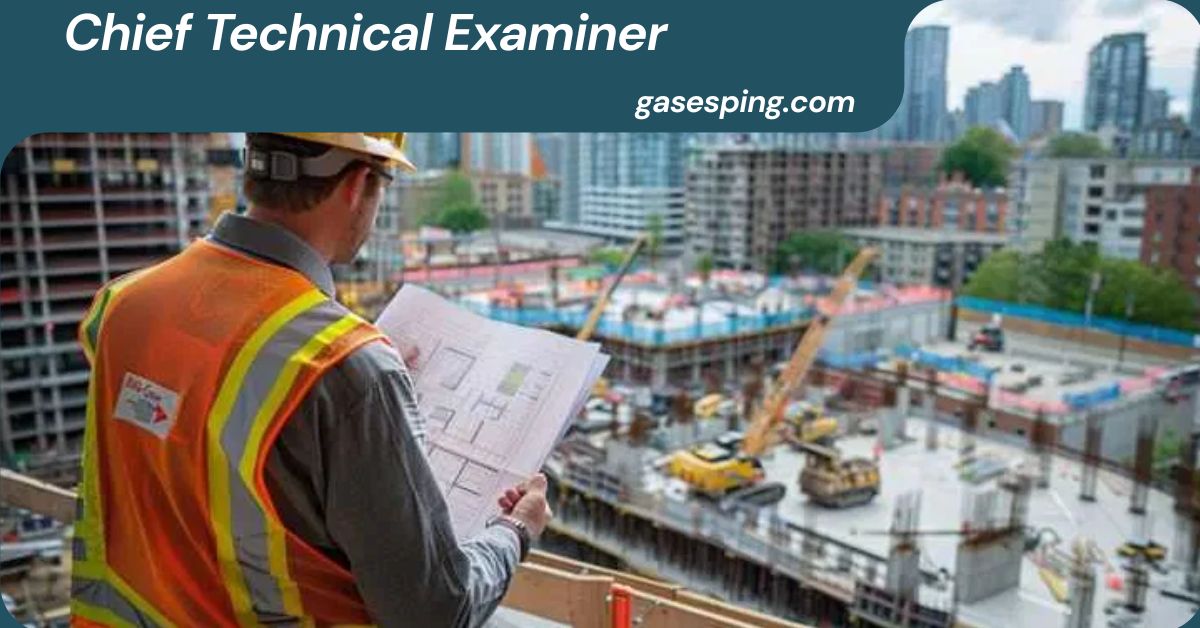
Every successful construction project, government contract, or large public procurement depends on one important factor: accountability. Organizations invest millions of dollars into infrastructure, buildings, equipment, and public services. Without proper technical oversight, these projects can suffer from poor workmanship, unnecessary costs, delays, and even corruption.
- What Is a Chief Technical Examiner?
- Why the Chief Technical Examiner Is Important
- Main Objectives of a Chief Technical Examiner
- Ensure Quality Standards
- Verify Contract Compliance
- Improve Accountability
- Reduce Financial Waste
- Support Transparent Procurement
- Core Responsibilities of a Chief Technical Examiner
- Technical Evaluation of Construction Projects
- Procurement Examination
- Contract Analysis
- Site Inspections
- Technical Investigation
- Preparation of Technical Reports
- Areas Reviewed by a Chief Technical Examiner
- Civil Engineering Projects
- Mechanical Systems
- Electrical Infrastructure
- Procurement Agreements
- Retail Acquisitions
- Qualifications and Skills Required to Become a Chief Technical Examiner
- Strong Engineering Knowledge
- Analytical Thinking
- Investigation Skills
- Communication Skills
- Attention to Detail
- Problem-Solving Ability
- Industries That Employ Chief Technical Examiners
- How a Chief Technical Examiner Conducts a Technical Examination
- Step 1: Receiving the Assignment
- Step 2: Reviewing Documents
- Step 3: Conducting Site Inspections
- Step 4: Technical Analysis
- Step 5: Reporting Findings
- Common Issues Identified by a Chief Technical Examiner
- Poor Construction Quality
- Contract Violations
- Procurement Problems
- Cost Overruns
- Material Quality Issues
- Challenges Faced by a Chief Technical Examiner
- Modern Technologies Used by Chief Technical Examiners
- Best Practices for Effective Technical Examination
- Maintain Complete Documentation
- Follow Established Standards
- Stay Objective
- Continue Professional Development
- Improve Communication
- Future of the Chief Technical Examiner Profession
- Greater Focus on Transparency
- Increased Digital Procurement
- Sustainability Reviews
- Artificial Intelligence Support
- Expert Insights and Practical Analysis
- Conclusion
- FAQs
- Is a chief technical examiner the same as a technical auditor?
- Does a chief technical examiner supervise construction workers?
- Can private companies hire a chief technical examiner?
- What documents are most important during a technical examination?
- Does a chief technical examiner investigate procurement fraud?
- How does a chief technical examiner improve project quality?
- What industries benefit most from chief technical examiners?
This is where the chief technical examiner plays an essential role.
A chief technical examiner is a senior technical authority responsible for examining engineering projects, procurement activities, construction works, and technical decisions. Rather than managing projects directly, this professional evaluates whether projects follow approved standards, contract conditions, engineering specifications, financial regulations, and quality requirements.
Many people think a chief technical examiner only inspects construction sites. In reality, the position is much broader. It combines engineering knowledge, auditing skills, procurement expertise, contract analysis, investigation techniques, and risk management.
In government organizations, public works departments, anti-corruption agencies, infrastructure authorities, and large public institutions, the chief technical examiner serves as an independent technical reviewer who helps ensure public money is spent wisely and projects are completed according to approved standards.
As stated in your topic information, the Chief Technical Examiner operates as a specialized body that conducts technical evaluations of construction projects, procurement agreements, and retail acquisitions. This makes the role critical for ensuring fairness, transparency, technical accuracy, and value for money.
This guide explains everything about the chief technical examiner, including responsibilities, qualifications, technical investigations, procurement reviews, construction audits, career opportunities, future trends, and frequently asked questions.
What Is a Chief Technical Examiner?
A chief technical examiner is a senior engineering and technical oversight professional responsible for reviewing technical projects to determine whether engineering work, procurement processes, contracts, and construction activities comply with approved standards.
Unlike project managers who focus on completing projects, a chief technical examiner evaluates completed work or ongoing projects from an independent perspective.
Their work typically includes reviewing:
- Construction quality
- Engineering specifications
- Procurement contracts
- Cost estimates
- Tender evaluations
- Material quality
- Infrastructure development
- Equipment purchases
- Technical documentation
- Contract compliance
The goal is to identify technical deficiencies before they become expensive problems.
A chief technical examiner protects organizations from financial losses by ensuring every technical decision follows established regulations and engineering principles.

Why the Chief Technical Examiner Is Important
Large construction and procurement projects involve many contractors, consultants, suppliers, engineers, and government officials.
Without independent technical oversight, problems such as these can occur:
- Low-quality construction
- Inflated project costs
- Unauthorized design changes
- Poor contract management
- Delayed completion
- Material substitution
- Procurement irregularities
- Safety violations
- Waste of public funds
The chief technical examiner helps prevent these issues through objective technical evaluations.
Instead of relying on assumptions, they verify facts using engineering evidence, documentation, measurements, inspections, and technical analysis.
Also Read:Axurbain: The Complete Guide to the Future of Smart and Sustainable Cities
Their findings help organizations improve transparency while protecting public resources.
Main Objectives of a Chief Technical Examiner
The primary objective is to determine whether technical work meets approved requirements.
However, the role includes several additional objectives.
Ensure Quality Standards
Every construction project should comply with engineering standards.
The chief technical examiner evaluates whether:
- Materials meet specifications.
- Construction follows approved designs.
- Workmanship satisfies quality requirements.
- Testing procedures are completed correctly.
Verify Contract Compliance
Construction contracts define exactly what contractors must deliver.
The examiner confirms whether contractors have fulfilled all contractual obligations.
Improve Accountability
Independent technical reviews create greater accountability among contractors, engineers, consultants, and procurement officials.
Everyone involved knows that technical decisions may later be reviewed.
Reduce Financial Waste
Small technical mistakes often become expensive problems.
Finding these issues early helps organizations reduce unnecessary spending.
Support Transparent Procurement
Procurement reviews help ensure contracts are awarded fairly and competitively.
This reduces opportunities for favoritism and technical manipulation.
Core Responsibilities of a Chief Technical Examiner
The daily responsibilities vary depending on the organization, but several duties remain common across most industries.
Technical Evaluation of Construction Projects
Construction evaluation is one of the most important responsibilities.
This includes reviewing:
- Roads
- Bridges
- Hospitals
- Schools
- Government buildings
- Water systems
- Electrical infrastructure
- Public facilities
The examiner checks whether completed work matches approved engineering drawings and specifications.
Procurement Examination
Public procurement involves purchasing goods, services, and construction work.
The chief technical examiner reviews procurement activities to ensure:
- Competitive bidding was followed.
- Technical specifications were appropriate.
- Vendor selection was fair.
- Evaluation criteria were applied correctly.
- Prices were reasonable.
- Contract terms were followed.
Contract Analysis
Contracts contain technical obligations for both contractors and clients.
The examiner studies contracts to determine whether:
- Work scope matches execution.
- Payment terms are justified.
- Change orders are supported.
- Variations are properly approved.
- Claims are technically valid.
Site Inspections
Field inspections provide direct evidence of project quality.
Site visits often include:
- Measuring completed work
- Checking structural quality
- Reviewing materials
- Observing construction methods
- Interviewing engineers
- Inspecting equipment
- Comparing actual work with approved drawings
Technical Investigation
When concerns arise, the chief technical examiner conducts detailed investigations.
These investigations may examine:
- Construction failures
- Contract disputes
- Cost overruns
- Procurement complaints
- Technical negligence
- Poor workmanship
- Material defects
The investigation focuses on evidence rather than assumptions.
Preparation of Technical Reports
After completing an examination, findings are documented in comprehensive reports.
These reports usually include:
- Project background
- Scope of examination
- Technical observations
- Engineering analysis
- Evidence collected
- Compliance assessment
- Risk analysis
- Recommendations
- Corrective actions
Well-prepared reports support management decision-making and future improvements.
Areas Reviewed by a Chief Technical Examiner
The scope extends beyond construction.
A chief technical examiner may review multiple technical areas depending on the organization.
Civil Engineering Projects
Examples include:
- Highways
- Bridges
- Drainage systems
- Airports
- Dams
- Public buildings
Mechanical Systems
Technical examinations may include:
- Industrial equipment
- HVAC systems
- Pumps
- Manufacturing machinery
- Utility systems
Electrical Infrastructure
Reviews may cover:
- Power distribution
- Electrical installations
- Backup generators
- Lighting systems
- Control systems
Procurement Agreements
These examinations determine whether purchasing decisions comply with technical and legal requirements.
The examiner reviews:
- Tender specifications
- Bid evaluations
- Supplier qualifications
- Technical scoring
- Procurement documentation
Retail Acquisitions
As highlighted in the topic information, the Chief Technical Examiner also evaluates retail acquisitions.
This involves reviewing whether purchased equipment, products, or technical assets meet organizational needs and procurement standards.
The examination focuses on:
- Product quality
- Technical suitability
- Pricing
- Vendor compliance
- Delivery conditions
- Warranty provisions
- Value for money
Qualifications and Skills Required to Become a Chief Technical Examiner
Becoming a chief technical examiner requires a combination of education, technical expertise, analytical thinking, and practical engineering experience. Since the role involves evaluating construction projects, procurement agreements, and technical compliance, professionals must possess both strong academic knowledge and real-world problem-solving abilities.
Most chief technical examiners begin their careers by earning a degree in an engineering or construction-related field. Common educational backgrounds include:
- Civil Engineering
- Mechanical Engineering
- Electrical Engineering
- Construction Engineering
- Architecture
- Quantity Surveying
- Construction Management
- Industrial Engineering
Many professionals also strengthen their qualifications by studying project management, procurement, contract administration, quality management, or public administration. Because engineering standards and procurement regulations continue to evolve, continuous learning and professional development are essential throughout a chief technical examiner’s career.
Along with the right education, successful chief technical examiners develop several important professional skills.
Strong Engineering Knowledge
A chief technical examiner should have a solid understanding of engineering design, construction methods, building materials, structural principles, infrastructure systems, and technical standards. This knowledge allows them to evaluate whether projects meet approved specifications and industry requirements.
Analytical Thinking
Large construction and procurement projects generate thousands of technical documents. The ability to analyze information, identify inconsistencies, and recognize potential technical risks is one of the most valuable skills for this role.
Investigation Skills
Technical examinations rely on facts and evidence. A chief technical examiner must know how to collect evidence, review project documentation, verify technical information, identify irregularities, and determine the root causes of technical problems.
Communication Skills
Technical findings are often presented to managers, government officials, or other stakeholders who may not have an engineering background. Clear communication helps explain complex technical issues in a simple and understandable way, making it easier for decision-makers to take appropriate action.
Attention to Detail
Even a small technical mistake can lead to significant financial losses or safety concerns. Chief technical examiners carefully review engineering drawings, specifications, measurements, calculations, invoices, contracts, and inspection reports to ensure every detail meets the required standards.
Problem-Solving Ability
Identifying problems is only part of the job. A successful chief technical examiner also recommends practical and cost-effective solutions that improve project quality, reduce risks, and ensure compliance with engineering and procurement standards.
This combination of education, technical knowledge, investigative ability, and professional judgment enables a chief technical examiner to perform independent evaluations that protect both organizational investments and public resources.
Industries That Employ Chief Technical Examiners
The role is valuable across many sectors where technical projects involve significant investments and public accountability.
Common employers include:
- Government agencies
- Public works departments
- Transportation authorities
- Infrastructure development organizations
- Public procurement agencies
- Municipal governments
- Engineering consulting firms
- Construction companies
- Utility providers
- Public housing authorities
- Anti-corruption oversight organizations
- Audit institutions
- Regulatory bodies
Although responsibilities vary, the common objective remains the same: ensuring that technical work is accurate, compliant, efficient, and provides value for the organization and the public.
Also Read:Monika Leveski: Complete Biography, Career Journey, Achievements, and Influence
How a Chief Technical Examiner Conducts a Technical Examination
The work of a chief technical examiner follows a structured process rather than relying on assumptions or opinions. Every examination is based on evidence, engineering standards, and documented facts.
Although each organization may have its own procedures, the overall process is generally similar.
Step 1: Receiving the Assignment
The examination usually begins after a request from management, an audit department, a government agency, or a complaint regarding a project.
The examiner first defines the scope of the review by identifying:
- Project objectives
- Contract details
- Time frame
- Budget
- Technical specifications
- Expected deliverables
Having a clear scope helps ensure that the examination remains focused and objective.
Step 2: Reviewing Documents
Before visiting the project site, the chief technical examiner studies all available records.
These may include:
- Engineering drawings
- Design calculations
- Tender documents
- Procurement files
- Bills of quantities
- Contracts
- Payment records
- Inspection reports
- Material testing reports
- Progress reports
Document reviews often reveal inconsistencies that require further investigation.
Step 3: Conducting Site Inspections
Field inspections allow the examiner to compare documentation with the actual work completed.
During the inspection, the examiner may:
- Measure completed work
- Inspect construction quality
- Review materials
- Verify installed equipment
- Interview engineers and contractors
- Observe ongoing work
- Compare completed work with approved drawings
Site inspections provide valuable evidence that cannot always be found in paperwork.
Step 4: Technical Analysis
After collecting information, the examiner performs detailed technical analysis.
This involves comparing project performance against:
- Engineering standards
- Contract requirements
- Approved specifications
- Procurement regulations
- Industry best practices
Any differences are documented carefully with supporting evidence.
Step 5: Reporting Findings
The final report summarizes all observations and provides recommendations.
A professional report typically includes:
- Executive summary
- Project overview
- Examination methodology
- Technical findings
- Supporting evidence
- Risk assessment
- Recommendations
- Corrective actions
- Conclusion
The report becomes an important decision-making document for senior management.
Common Issues Identified by a Chief Technical Examiner
A chief technical examiner frequently discovers problems that affect project quality, cost, or compliance.
Some of the most common findings include:
Poor Construction Quality
Examples include:
- Weak concrete work
- Improper reinforcement
- Incorrect dimensions
- Defective finishes
- Inadequate workmanship
Contract Violations
Common violations include:
- Unauthorized changes
- Missing deliverables
- Delayed completion
- Failure to meet specifications
Procurement Problems
These may involve:
- Poor technical specifications
- Limited competition
- Incorrect bid evaluations
- Inadequate documentation
- Vendor non-compliance
Cost Overruns
The examiner determines whether additional costs are technically justified or resulted from poor planning.
Material Quality Issues
Construction materials may not always match approved specifications.
Examples include:
- Lower-grade steel
- Poor-quality cement
- Inferior electrical equipment
- Non-approved replacement materials
Challenges Faced by a Chief Technical Examiner
Despite their expertise, chief technical examiners face several professional challenges.
Managing Complex Projects
Large infrastructure projects involve thousands of technical documents and multiple contractors.
Reviewing every detail requires strong organizational skills.
Keeping Up With Technology
Engineering technologies continue to evolve rapidly.
Modern projects may include:
- Smart infrastructure
- Digital construction
- Artificial intelligence
- Building Information Modeling (BIM)
- Automated monitoring systems
Continuous learning is essential.
Balancing Independence
A chief technical examiner must remain objective even when reviewing projects involving senior officials or large organizations.
Professional integrity is one of the most valuable qualities in this role.
Tight Deadlines
Many investigations must be completed quickly while maintaining technical accuracy.
Balancing speed with quality can be challenging.
Modern Technologies Used by Chief Technical Examiners
Technology has transformed technical examinations.
Today’s chief technical examiner often relies on digital tools to improve efficiency and accuracy.
Common technologies include:
- Building Information Modeling (BIM)
- Geographic Information Systems (GIS)
- Drone inspections
- Laser scanning
- Digital measurement tools
- Project management software
- Procurement management platforms
- Document management systems
- Artificial intelligence for document analysis
- Data analytics software
These technologies help identify issues faster while improving the quality of technical evaluations.
Best Practices for Effective Technical Examination
Successful examinations follow proven professional practices.
Some of the most important include:
Maintain Complete Documentation
Every observation should be supported by evidence.
Photographs, measurements, laboratory reports, and engineering calculations strengthen examination findings.
Follow Established Standards
Personal opinions should never replace recognized engineering standards.
The examiner should always reference applicable technical codes and regulations.
Stay Objective
An examination should focus on facts rather than assumptions or personal opinions.
Objectivity increases credibility.
Continue Professional Development
Engineering practices constantly evolve.
Attending training programs, technical conferences, and certification courses helps examiners remain current.
Improve Communication
Clear reports help decision-makers understand technical findings and implement recommendations effectively.
Future of the Chief Technical Examiner Profession
The demand for experienced chief technical examiners is expected to grow as governments and organizations invest more in infrastructure, digital transformation, and public accountability.
Several trends are shaping the future of the profession.
Greater Focus on Transparency
Public agencies are placing greater emphasis on accountability and responsible spending.
Independent technical examinations help build public trust.
Increased Digital Procurement
Electronic procurement systems generate large amounts of digital data.
Future examinations will increasingly involve data analysis alongside traditional engineering reviews.
Sustainability Reviews
Environmental responsibility is becoming a major consideration in construction and procurement.
Chief technical examiners may evaluate whether projects meet sustainability goals, energy efficiency standards, and environmental regulations.
Artificial Intelligence Support
Artificial intelligence is expected to assist with:
- Document review
- Risk identification
- Contract analysis
- Procurement monitoring
- Cost comparisons
However, human judgment will remain essential for interpreting technical findings and making informed recommendations.
Expert Insights and Practical Analysis
The role of the chief technical examiner is often misunderstood because people assume it focuses only on identifying mistakes. In reality, the position is equally about improving future projects.
A well-conducted technical examination can help organizations:
- Improve procurement planning.
- Strengthen contract management.
- Reduce project risks.
- Increase construction quality.
- Enhance public confidence.
- Prevent repeated technical errors.
- Save significant financial resources over time.
Also Read:Voozon: The Ultimate Business Management Platform for Marketing, Sales, and Customer Growth
Rather than waiting until a project fails, organizations that involve technical examiners throughout the project lifecycle often identify risks early, leading to better outcomes and fewer costly corrections.
Another important insight is that the chief technical examiner should not be viewed as an obstacle to project delivery. Instead, this role supports project success by ensuring that engineering decisions are technically sound, financially responsible, and fully compliant with applicable standards.
Organizations that encourage collaboration between project teams and technical examiners often experience smoother project execution and improved long-term performance.
Conclusion
The chief technical examiner plays a critical role in protecting the quality, integrity, and efficiency of construction projects, procurement agreements, and technical investments. By independently reviewing engineering work, contracts, procurement activities, and project execution, these professionals help organizations ensure that technical decisions meet established standards and deliver value for money.
As infrastructure projects become larger and more complex, the need for experienced technical examiners continues to grow. Their ability to identify risks, evaluate compliance, investigate technical concerns, and recommend practical improvements contributes to stronger governance and better project outcomes.
Whether working for a government agency, infrastructure authority, regulatory organization, or engineering firm, a chief technical examiner combines technical expertise with analytical thinking and professional integrity to safeguard both public resources and organizational investments.
Looking ahead, digital technologies, artificial intelligence, advanced data analytics, and sustainable construction practices will continue to reshape the profession. However, the core mission will remain unchanged: providing independent, evidence-based technical evaluations that promote quality, accountability, and long-term success.
FAQs
Is a chief technical examiner the same as a technical auditor?
No. While both review technical activities, a chief technical examiner typically performs deeper engineering evaluations that include construction quality, procurement reviews, contract compliance, and technical investigations. A technical auditor often focuses more broadly on compliance and internal controls.
Does a chief technical examiner supervise construction workers?
Generally, no. The role is independent and focuses on evaluating completed or ongoing work rather than managing construction teams.
Can private companies hire a chief technical examiner?
Yes. Engineering firms, construction companies, utilities, and large corporations often appoint chief technical examiners or similar technical oversight professionals for major projects.
What documents are most important during a technical examination?
Key documents include engineering drawings, contracts, procurement files, bills of quantities, inspection reports, laboratory test results, payment records, and project schedules.
Does a chief technical examiner investigate procurement fraud?
The examiner may identify technical evidence of procurement irregularities and report findings. Legal or criminal investigations are usually handled by the appropriate enforcement or oversight authorities.
How does a chief technical examiner improve project quality?
By identifying technical deficiencies early, recommending corrective actions, and ensuring compliance with engineering standards, the examiner helps prevent defects from becoming larger and more expensive problems.
What industries benefit most from chief technical examiners?
Construction, transportation, utilities, public infrastructure, manufacturing, energy, government procurement, and engineering consulting all benefit from technical examination services.