

Introduction
Heel pain can make even the simplest daily activities feel difficult. Walking to work, exercising, climbing stairs, or even standing for a long time can become painful. One of the most common causes of heel pain is plantar fasciitis. This condition affects millions of people every year, especially those who spend long hours on their feet.
- Introduction
- 1. Standing for Long Hours
- 2. Running or High-Impact Exercise
- 3. Wearing Poor Footwear
- 4. Being Overweight
- 5. Tight Calf Muscles
- 6. Flat Feet or High Arches
- 1. Rest Your Feet
- 2. Apply Ice
- 3. Stretching Exercises
- 4. Wear Supportive Shoes
- 5. Use Orthotic Inserts
- 6. Take Pain Relief Medication
- 7. Night Splints
- 8. Physical Therapy
- 9. Maintain a Healthy Weight
- 10. Shockwave Therapy
- 11. Cortisone Injections
- 12. Surgery
- 1. What is the fastest way to treat plantar fasciitis?
- 2. Can plantar fasciitis heal on its own?
- 3. Is walking good for plantar fasciitis?
- 4. What shoes are best for plantar fasciitis?
- 5. How long does plantar fasciitis usually last?
The good news is that plantar fasciitis can usually be treated without surgery. With the right combination of rest, stretching, supportive footwear, and healthy lifestyle habits, most people recover within a few months.
In this guide, you will learn everything you need to know about plantar fasciitis treatment, including its causes, symptoms, home remedies, medical treatments, prevention tips, and answers to common questions.
What Is Plantar Fasciitis?
Plantar fasciitis is a painful condition that happens when the plantar fascia becomes irritated or inflamed. The plantar fascia is a thick band of tissue that runs from your heel bone to the front of your foot. It supports the arch of your foot and helps absorb shock while walking.
When too much pressure is placed on this tissue, tiny tears can develop. Over time, these small injuries cause inflammation and pain, especially around the heel.
The pain is often worse during the first few steps in the morning or after sitting for a long time.
Common Symptoms of Plantar Fasciitis
Recognizing the symptoms early can help you begin treatment before the condition becomes more serious.
The most common symptoms include:
- Sharp pain in the bottom of the heel
- Pain when taking the first steps after waking up
- Heel pain after standing for a long time
- Pain after exercise rather than during exercise
- Stiffness in the foot
- Tenderness near the heel
- Pain that improves with gentle walking but returns later
Some people describe the pain as feeling like stepping on a nail.
What Causes Plantar Fasciitis?
Several factors can increase the risk of developing plantar fasciitis.
1. Standing for Long Hours
People who work as teachers, nurses, factory workers, or retail employees spend many hours standing, placing constant pressure on the feet.
2. Running or High-Impact Exercise
Running, jumping, and sports that involve repeated foot impact can strain the plantar fascia.
3. Wearing Poor Footwear
Shoes without proper arch support or cushioning increase stress on the heel.
4. Being Overweight
Extra body weight places additional pressure on the plantar fascia every time you walk.
5. Tight Calf Muscles
Tight calf muscles reduce ankle flexibility, increasing tension on the plantar fascia.
6. Flat Feet or High Arches
Both foot types can affect how weight is distributed across the foot, leading to extra strain.
Best Plantar Fasciitis Treatment Options
Most people recover without surgery. The goal of treatment is to reduce pain, decrease inflammation, and allow the plantar fascia to heal naturally.
1. Rest Your Feet
One of the easiest treatments is giving your feet time to recover.
Avoid activities that increase pain, such as:
- Running
- Jumping
- Long walks
- Standing for extended periods
Short periods of rest can significantly reduce inflammation.
2. Apply Ice
Ice helps reduce swelling and pain.
Wrap an ice pack in a towel and place it on your heel for about 15–20 minutes several times a day.
Another helpful method is rolling your foot over a frozen water bottle.
3. Stretching Exercises
Stretching improves flexibility and reduces tension on the plantar fascia.
Simple stretches include:
Calf Stretch
Stand facing a wall with one foot behind the other.
Keep the back leg straight and press the heel into the floor.
Hold for 30 seconds and repeat several times.
Plantar Fascia Stretch
Sit in a chair and pull your toes gently toward your shin until you feel a stretch along the bottom of your foot.
Hold for 20–30 seconds.
Repeat several times daily.
4. Wear Supportive Shoes
Supportive footwear is one of the most effective long-term treatments.
Look for shoes with:
- Good arch support
- Soft cushioning
- Thick heel padding
- Strong heel support
- Comfortable fit
Avoid walking barefoot on hard floors.
5. Use Orthotic Inserts
Orthotic inserts provide additional support for your arches.
They help distribute pressure more evenly across the foot and reduce stress on the plantar fascia.
Both custom and over-the-counter inserts may help relieve symptoms.
6. Take Pain Relief Medication
Doctors sometimes recommend anti-inflammatory medications to reduce pain and swelling.
Always follow the recommended dosage and consult a healthcare professional before using medication regularly.
7. Night Splints
Night splints gently stretch the plantar fascia while you sleep.
They keep the foot in a position that prevents the tissue from tightening overnight.
Many people notice less pain when taking their first morning steps.
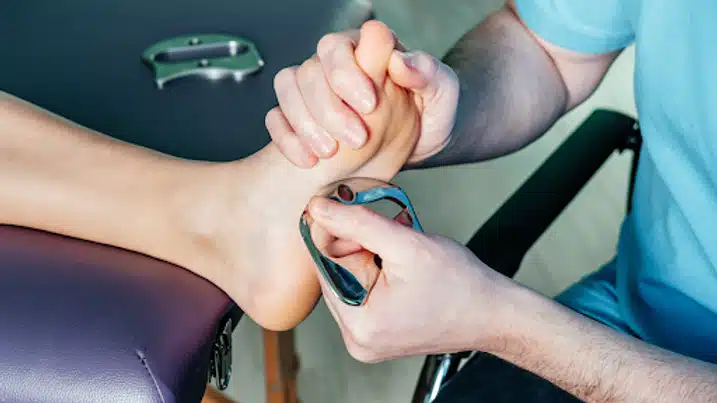
8. Physical Therapy
A physical therapist can create a personalized exercise program.
Treatment may include:
- Stretching exercises
- Strengthening exercises
- Massage techniques
- Balance training
- Walking corrections
Physical therapy often speeds recovery.
9. Maintain a Healthy Weight
Losing excess weight reduces pressure on your feet.
Even a small amount of weight loss can noticeably decrease heel pain.
Healthy eating and regular low-impact exercise can help.
10. Shockwave Therapy
If pain continues after several months of conservative treatment, a doctor may recommend shockwave therapy.
This treatment uses sound waves to stimulate healing within the damaged tissue.
Many patients experience gradual improvement after several sessions.
11. Cortisone Injections
For severe pain, a doctor may recommend a corticosteroid injection.
These injections reduce inflammation and provide temporary relief.
However, repeated injections are generally avoided because they may weaken the plantar fascia.
12. Surgery
Surgery is usually considered only after many months of unsuccessful treatment.
During surgery, part of the plantar fascia may be released to reduce tension.
Most people recover without needing surgery.
Home Remedies for Plantar Fasciitis
Many simple home treatments can help reduce discomfort.
Helpful habits include:
- Rolling your foot over a tennis ball
- Massaging the sole of your foot
- Resting when pain increases
- Wearing supportive slippers indoors
- Stretching every morning
- Avoiding walking barefoot
Consistency is more important than doing everything at once.
Exercises That Are Safe During Recovery
Staying active is important, but choose exercises that do not increase heel pain.
Good options include:
- Swimming
- Cycling
- Water aerobics
- Gentle yoga
- Upper-body workouts
Avoid high-impact activities until your symptoms improve.
How Long Does Recovery Take?
Recovery depends on how early treatment begins and how closely you follow your treatment plan.
Typical recovery times are:
- Mild cases: 4–8 weeks
- Moderate cases: 2–4 months
- Severe cases: 6–12 months
Most people recover completely with conservative treatment.
How to Prevent Plantar Fasciitis
Preventing plantar fasciitis is often easier than treating it.
Simple prevention tips include:
- Wear supportive shoes every day.
- Replace worn-out athletic shoes regularly.
- Stretch your calves before exercise.
- Warm up before physical activity.
- Maintain a healthy weight.
- Avoid standing for very long periods without breaks.
- Strengthen your feet and lower legs.
- Increase exercise intensity gradually instead of suddenly.
These habits can greatly reduce your risk of future heel pain.
When Should You See a Doctor?
While many cases improve with home treatment, you should seek medical advice if:
- Pain lasts longer than several weeks.
- Walking becomes difficult.
- The heel becomes swollen or red.
- Pain suddenly becomes severe.
- Home treatments are not helping.
- You notice numbness or tingling in your foot.
Early treatment can prevent long-term discomfort and speed recovery.
Final Thoughts
Plantar fasciitis is one of the most common causes of heel pain, but it is also one of the most treatable. Although the pain can interfere with daily life, most people recover without surgery by following a consistent treatment plan.
Simple steps such as resting your feet, stretching regularly, wearing supportive shoes, using ice, and maintaining a healthy weight can make a significant difference. If symptoms continue despite home care, medical treatments like physical therapy, orthotics, shockwave therapy, or other options may provide additional relief.
Patience is important because healing takes time. By staying consistent with your treatment and taking care of your feet, you can return to normal activities with less pain and a lower risk of the condition coming back.
Frequently Asked Questions (FAQs)
1. What is the fastest way to treat plantar fasciitis?
The fastest approach usually includes resting your foot, applying ice, performing daily stretching exercises, wearing supportive shoes, and using orthotic inserts. Early treatment often leads to quicker recovery.
2. Can plantar fasciitis heal on its own?
Yes, many cases improve over time. However, proper treatment such as stretching, supportive footwear, and reducing strain can help you heal faster and lower the chance of the pain returning.
3. Is walking good for plantar fasciitis?
Gentle walking is usually safe, but long walks or walking on hard surfaces may worsen symptoms. Listen to your body and avoid activities that increase heel pain.
4. What shoes are best for plantar fasciitis?
Shoes with good arch support, cushioned soles, a supportive heel, and a comfortable fit are generally the best choice. Avoid worn-out shoes and walking barefoot on hard floors.
5. How long does plantar fasciitis usually last?
Mild cases may improve within one to two months, while more severe cases can take several months to heal. Following a consistent treatment plan can help speed recovery.